
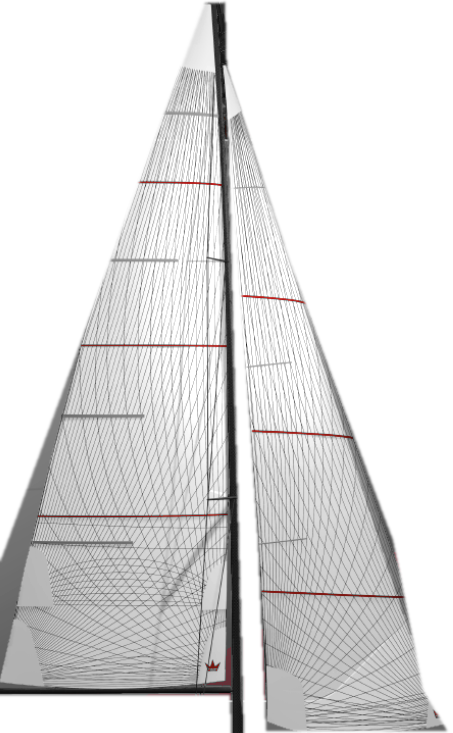
 J1 · scanning
Choose your sails
Scan the tag in the tack or pick your sailmaker. We load the sail's design targets so every scan is judged against how it was built to look.
- Design camber targets from Elvstrøm, 6 to 22 kts
- Accepted range ±2 points at every wind speed
- Trim advice for sheet, lead, halyard and forestay sag
Tag matched · ready to scan
Mock — numbers invented. Not connected to any real sail data.
Input wind speed
What was the wind speed when the photo was taken? We’ll use that to determine Elvstrom's ideal shape for your sail
Mock: the rest of the flow is fixed at 14 kts.
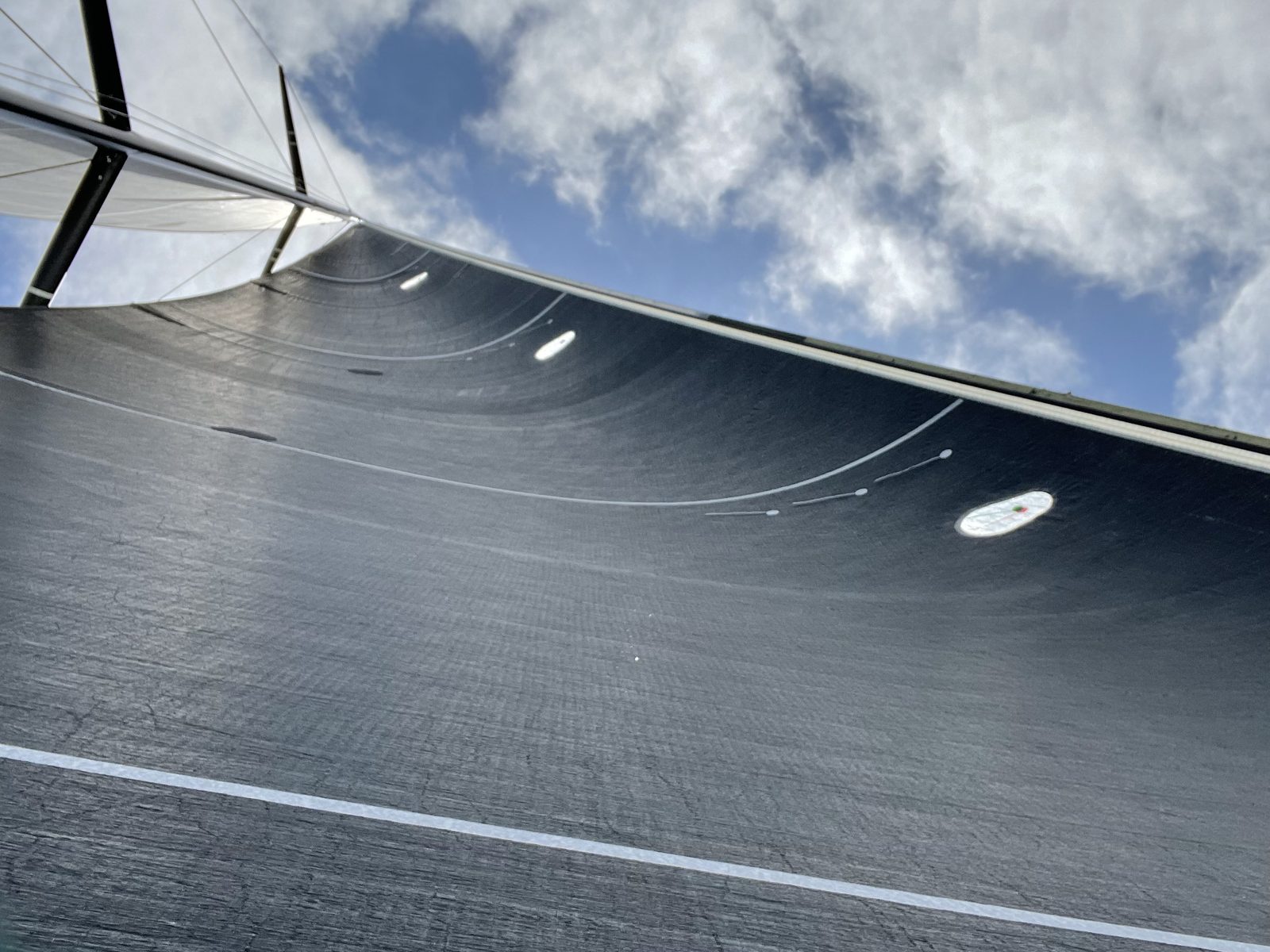
Great scan. It looks like you're a little full in your lower stripe (40%), 16.9% deep where this jib wants about 13% in 14 knots. Your top, upper and bottom stripes are clearly in the acceptable range, so the sail is mostly right where it should be.
To point higher and carry less heel, flatten the lower half of the jib. Give the jib sheet a little more trim, then move the lead aft one hole so the foot flattens without closing the upper leech. If it still looks deep, add a few turns of backstay to take sag out of the forestay. Leave the halyard alone; the draft is already where it should be.
You should see an increase in speed and efficiency: a boat that points higher and stays on its feet in the puffs. Go!
Lower stripe fuller than target. Top, upper and bottom in range.
| Stripe | Camber % | Draft % |
|---|---|---|
| ■ 80% Top | 14.6 | 35.0 |
| ■ 60% Upper | 13.4 | 36.0 |
| ■ 40% Lower | 16.9 | 38.0 |
| ■ 20% Bottom | 12.1 | 34.0 |
The airflow is a fast flow model worked out on this phone for these exact shapes. It shows attached flow only, not stall, so use it to compare trim, not instead of telltales. Colours are relative.
| Stripe | Target | Accepted | Measured | Verdict |
|---|---|---|---|---|
| Top | 13.0% | 11 to 15% | 14.6% | in |
| Upper | 13.0% | 11 to 15% | 13.4% | in |
| Lower | 13.0% | 11 to 15% | 16.9% | high |
| Bottom | 13.0% | 11 to 15% | 12.1% | in |
Targets from your Elvstrøm EPEX J1 design at 14 kts. Assumes a non-overlapping jib on an adjustable lead track.
Mock — numbers invented. Real photo, one made-up jib scan (4 stripes, 14 kts) used on every screen. Target curve is a generic 16% to 10% jib rule.